
Market Trends, Cost Drivers, and Buying Insights
The price per ton of micronized barite is a key concern for buyers in oilfield services, coatings, plastics, chemicals, and industrial manufacturing. Unlike standard barite, micronized barite is a value-added product with tighter particle size control, higher processing costs, and stricter quality requirements—factors that significantly influence its market price.
As global demand for high-performance mineral fillers and API-grade weighting agents grows, understanding micronized barite pricing has become essential for procurement managers and industrial buyers. According to the USGS, barite remains a strategic industrial mineral with pricing strongly linked to processing level and end-use application (https://www.usgs.gov).
What Is Micronized Barite and Why Price Matters
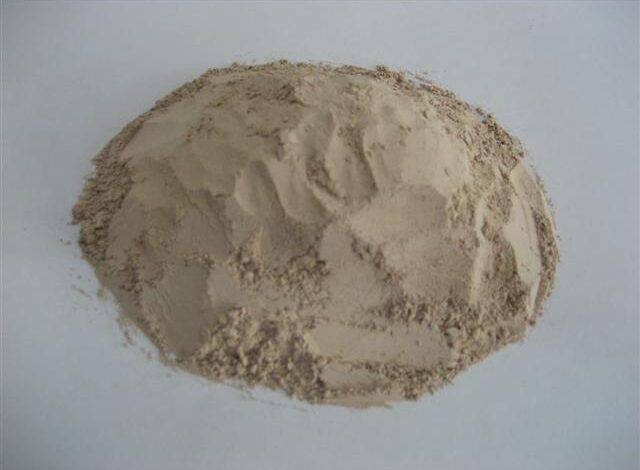
Micronized barite is a finely ground form of barium sulfate (BaSO₄), processed to achieve micron-level particle sizes, typically between 1 and 10 microns. This advanced processing enhances dispersion, suspension stability, and functional performance—but also increases production costs.
| The price per ton of micronized barite is a key concern for buyers in oilfield services, coatings, plastics, chemicals, and industrial manufacturing. Oilfield grades must meet API 13A / ISO 13500 standards, including strict limits on heavy metals and particle size.High-purity barite ore with low iron and calcium content reduces beneficiation costs. Countries with strong barite reserves—such as China, India, Morocco, and Mexico—often influence global pricing trends |
Key Technical Specifications Affecting Price
-
BaSO₄ content: 95–99%
-
Particle size (D50): 1–5 microns
-
Specific gravity: 4.1–4.6
-
Whiteness index: High (for industrial grades)
-
Moisture content: <1%
These specifications are outlined in industrial mineral references such as Encyclopaedia Britannica and AZoM Materials
(https://www.britannica.com, https://www.azom.com).

Micronized Barite Price per Ton: Global Market Overview
Average Price Ranges (Indicative)
While prices vary by region and specification, micronized barite price per ton generally falls within these indicative ranges:
-
Industrial / filler grade: USD 180 – 280 per ton
-
Chemical-grade micronized barite: USD 220 – 350 per ton
-
API-grade micronized oilfield barite: USD 250 – 450 per ton
Market analysts from Statista and Mordor Intelligence note that micronized products typically command a 30–70% premium over standard barite due to additional processing and quality control
(https://www.statista.com, https://www.mordorintelligence.com).
“Micronization significantly increases the value of barite by improving performance and consistency, which directly reflects in pricing,” — Industrial Minerals Analyst, Mordor Intelligence
Key Factors Influencing Micronized Barite Price per Ton
Raw Material Quality & Ore Source
High-purity barite ore with low iron and calcium content reduces beneficiation costs. Countries with strong barite reserves—such as China, India, Morocco, and Mexico—often influence global pricing trends (https://www.usgs.gov).
Micronization Technology & Processing Cost
Advanced processing methods such as:
-
Jet milling
-
Ball milling with air classification
-
Surface treatment
increase energy consumption and capital costs, pushing prices upward. According to Chemical Engineering World, fine grinding is one of the most cost-intensive stages in mineral processing (https://www.chemicalengineeringworld.com).
Particle Size Distribution (PSD)
The finer and more uniform the PSD, the higher the price per ton. Products with D50 ≤ 2 microns or narrow distribution are premium grades used in:
-
High-performance coatings
-
Advanced polymers
-
Oilfield drilling fluids
Application Sector Demand
Demand from specific industries affects pricing:
-
Oil & gas drilling: High demand for API-grade micronized barite
-
Coatings & paints: Demand driven by construction and infrastructure
-
Plastics & rubber: Price sensitivity but high volume
According to Rigzone, oilfield activity strongly influences barite pricing cycles (https://www.rigzone.com).
Micronized Barite Price for Oilfield vs Industrial Use
Oilfield Micronized Barite Pricing
Oilfield grades must meet API 13A / ISO 13500 standards, including strict limits on heavy metals and particle size. This compliance increases costs.
“API-compliant micronized barite consistently trades at a premium due to tighter specifications and testing requirements,” — Drilling Fluids Engineer
API standards are defined by the American Petroleum Institute
(https://www.api.org).
Industrial & Chemical Micronized Barite Pricing
Industrial buyers prioritize:
-
Whiteness
-
Dispersion
-
Chemical inertness
These grades are widely used in coatings, plastics, rubber, and chemical formulations, as documented by SpecialChem
(https://www.specialchem.com).
Logistics, Packaging & Regional Price Differences
Transportation & Export Costs
Micronized barite is dense, so freight costs significantly affect final price per ton. FOB prices are usually lower than CIF prices, especially for overseas shipments.
Key export hubs include Asia-Pacific, where pricing benefits from proximity to processing plants (https://www.mordorintelligence.com).
Packaging Options
Packaging also affects cost:
-
25 kg bags: Higher packaging cost per ton
-
1-ton jumbo bags: More economical
-
Bulk shipments: Lowest cost per ton
Specialized Pricing Terminology (SEO-Focused)
To align with buyer search intent, common pricing-related terms include:
-
Micronized Barite Price per Ton
-
API-Grade Barite Cost
-
High-Density Mineral Filler Pricing
-
BaSO₄ Powder Market Price
-
Industrial Barite FOB / CIF Price
These keywords improve visibility for procurement-focused SEO searches.
Sustainability, Compliance & Their Impact on Price
Environmentally responsible mining and processing can slightly increase prices but reduce long-term risk. Compliance with REACH, ISO, and environmental regulations is increasingly valued by international buyers.
Regulatory guidance is provided by the European Chemicals Agency (ECHA)
(https://echa.europa.eu).
“Buyers are willing to pay more for traceable, compliant micronized barite with consistent quality,” — Global Procurement Manager
Future Outlook: Micronized Barite Price Trends
Market analysts project:
-
Steady price growth driven by oilfield demand
-
Increased consumption in high-performance coatings and polymers
-
Continued premium for ultra-fine and API-compliant grades
Forecasts from Mordor Intelligence suggest sustained demand through 2030
(https://www.mordorintelligence.com).
Conclusion: Understanding Micronized Barite Price per Ton
The price per ton of micronized barite reflects its processing complexity, performance advantages, and application-specific requirements. While more expensive than standard barite, micronized grades deliver superior value through improved efficiency, stability, and compliance.
For buyers seeking high-performance, reliable, and specification-compliant mineral solutions, micronized barite remains a strategic and commercially justified investment.