
Industrial Minerals → Bentonite
Iranian Bentonite
- Introduction
- What Is Bentonite?
- Types of Bentonites
- Bentonite Mineral Composition
- Properties and Specifications
- Main Applications
- Bentonite for Oil & Gas Drilling
- Bentonite for Foundry
- Bentonite for Construction
- Bentonite for Iron Ore Pelletizing
- Bentonite for Animal Feed / Agriculture
- Iranian Bentonite
- Bentonite Production in Iran
- Bentonite Grades and Quality
- Technical Specifications
- Packaging
- Bulk and Bag Packaging
- Bentonite Export from Iran
- How to Choose the Right Bentonite
- Bentonite Storage and Handling
- Iranian Bentonite vs. Other Sources
- Applications by Industry
- Frequently Asked Questions
- Conclusion
- Call for price & technical information
Informational:
- What is Bentonite?
- Bentonite uses
- Bentonite properties
Commercial
- Bentonite suppliers
- Bentonite manufacturers
- Bentonite price
B2B / Transactional
- Buy Bentonite
- Bentonite exporter
- Iranian Bentonite supplier
- Bentonite for drilling
-
- Title
- Meta Description
- Primary Key phrase
- Secondary Keywords
- Semantic Keywords
- FAQ
- Table of Technical Specifications
- Photos & Alt Text
- Internal Linking Map
Iranian Bentonite: Properties, Uses, Specifications and Export Guide
Introduction
Iranian bentonite is a naturally occurring clay mineral widely used in drilling fluids, foundry applications, construction, iron ore pelletizing, agriculture, and several other industrial processes. Because bentonite can absorb water, swell, bind particles, and provide excellent sealing properties, it has become an important industrial mineral in many manufacturing and processing industries.
Iran is home to significant mineral resources and produces different grades of bentonite for domestic industries and international markets. Depending on its mineral composition, particularly the amount and type of smectite minerals it contains, bentonite can have different swelling capacity, viscosity, absorption, and binding characteristics.
For industrial buyers, selecting the right bentonite is important because different applications require different technical specifications. Bentonite used in oil and gas drilling, for example, has different requirements from bentonite used in foundries, construction, or iron ore pelletizing.
This guide explains what bentonite is, its properties, major types, industrial applications, technical specifications, packaging, and the main considerations when sourcing bentonite from Iran.
What Is Bentonite?
Bentonite is a natural clay material consisting primarily of smectite minerals, especially montmorillonite. It is formed mainly through the alteration of volcanic ash and other volcanic materials over geological periods.
One of the most important characteristics of bentonite is its ability to interact with water. Some types of bentonite can absorb significant amounts of water and expand considerably. This property makes bentonite particularly useful for sealing, binding, filtration, drilling fluids, and other industrial applications.
The performance of bentonite depends on several factors, including:
- Mineral composition
- Montmorillonite content
- Cation exchange capacity (CEC)
- Swelling capacity
- Particle size
- Moisture content
- Viscosity
- Gel strength
- Fluid loss
- pH
- Absorption capacity
Therefore, the word “bentonite” alone does not define a single standardized product. Buyers should always evaluate the technical specifications and intended application before purchasing.
Main Types of Bentonites
Bentonite is commonly classified according to its dominant exchangeable cation and its behavior when exposed to water.
Sodium Bentonite
Sodium bentonite has a high swelling capacity and is widely used in applications where water absorption, sealing, and viscosity are important.
Typical applications include:
- Oil and gas drilling fluids
- Geosynthetic clay liners
- Pond and landfill sealing
- Civil engineering
- Water and wastewater applications
- Tunneling
- Construction
Calcium Bentonite
Calcium bentonite generally has lower swelling capacity than sodium bentonite but can have excellent adsorption and absorption properties.
It is commonly used in:
- Foundry applications
- Absorbents
- Agriculture
- Animal-related applications
- Construction materials
- Various industrial processes
Activated Bentonite
Calcium bentonite can be treated or activated to improve specific properties and make it suitable for particular industrial applications.
The activation process and final specifications depend on the intended use.
Chemical and Mineral Composition of Bentonite
The principal mineral in many bentonites is montmorillonite, a member of the smectite group.
However, natural bentonite may also contain varying amounts of:
- Quartz
- Feldspar
- Calcite
- Gypsum
- Other clay minerals
- Volcanic minerals
The exact composition varies according to the geological source.
For commercial purposes, buyers should request a recent laboratory analysis rather than relying only on the product name.
Important Properties of Bentonite
Swelling Capacity
Swelling capacity describes the ability of bentonite to expand after absorbing water.
High-swelling bentonite is particularly useful for:
- Drilling fluids
- Sealing
- Geotechnical applications
- Waterproofing
- Environmental containment
Viscosity
Viscosity is especially important for drilling-grade bentonite because the drilling fluid needs sufficient carrying capacity and rheological performance.
Water Absorption
Bentonite can absorb water and other liquids. Its absorption capacity varies considerably between deposits and grades.
Cation Exchange Capacity
CEC is an important indicator of the ability of clay minerals to exchange positively charged ions.
Higher CEC is often associated with a greater proportion of smectite minerals, although CEC should be evaluated together with other technical properties.
Binding Capacity
Bentonite can bind particles together, which makes it valuable in foundry and iron ore pelletizing applications.
Sealing Properties
When hydrated, suitable bentonite can form a low-permeability barrier. This makes it useful in environmental and civil engineering applications.
Major Industrial Applications of Bentonite
Bentonite is used in a wide range of industries.
Bentonite for Oil and Gas Drilling
Drilling-grade bentonite is one of the most important industrial applications.
Bentonite is added to drilling fluids to help:
- Increase viscosity
- Carry drilled cuttings to the surface
- Control fluid loss
- Stabilize the borehole
- Form a filter cake
- Lubricate the drilling system
The exact specifications required depend on the drilling method and applicable industry standards.
Bentonite for Foundry
Bentonite is widely used as a binder in green sand casting.
It helps bind sand particles and maintain mold strength during casting.
Important properties for foundry bentonite can include:
- Green compression strength
- Swelling behavior
- Thermal stability
- Binding capacity
- Moisture requirements
Bentonite for Iron Ore Pelletizing
Bentonite is used as a binder during the production of iron ore pellets.
Small quantities of bentonite can improve the green strength and handling properties of pellets before firing.
For this application, iron ore producers generally require controlled chemical composition and low levels of undesirable impurities.
Bentonite for Construction
Bentonite is used in several civil engineering applications, including:
- Diaphragm walls
- Tunneling
- Bored piles
- Drilling
- Groundwater control
- Waterproofing
- Soil sealing
Its ability to create a low-permeability barrier makes it valuable in geotechnical engineering.
Bentonite for Environmental Applications
Bentonite is used in environmental containment systems where low permeability is required.
Applications can include:
- Landfill liners
- Waste containment
- Pond sealing
- Canal sealing
- Water reservoirs
Bentonite for Agriculture
Certain bentonite products are used in agricultural applications because of their ability to absorb moisture and exchange ions.
However, agricultural products must be selected according to their intended use and applicable regulations.
Iranian Bentonite
Iran has extensive deposits of bentonite and produces several grades for domestic and international markets.
The characteristics of Iranian bentonite vary depending on the geological deposit and processing method.
For international buyers, the most important factors are not simply the country of origin but the consistency and suitability of the specific grade.
A professional supplier should be able to provide:
- Product specification
- Chemical analysis
- Physical properties
- Particle-size distribution
- Moisture information
- Packaging details
- Certificate of Analysis (COA)
- Safety Data Sheet (SDS), where applicable
Iranian Bentonite for Export
Iranian bentonite can be supplied to international industrial buyers in different grades and packaging formats.
Potential export markets include industries involved in:
- Oil and gas
- Foundry
- Iron and steel
- Construction
- Civil engineering
- Environmental engineering
- Industrial absorbents
Before shipment, buyers and sellers should agree on the exact product specification, particle size, packaging, quantity, delivery terms, and inspection requirements.
Bentonite Technical Specifications
The required specifications depend on the application.
A typical commercial specification sheet may include:
| Parameter | Typical Information |
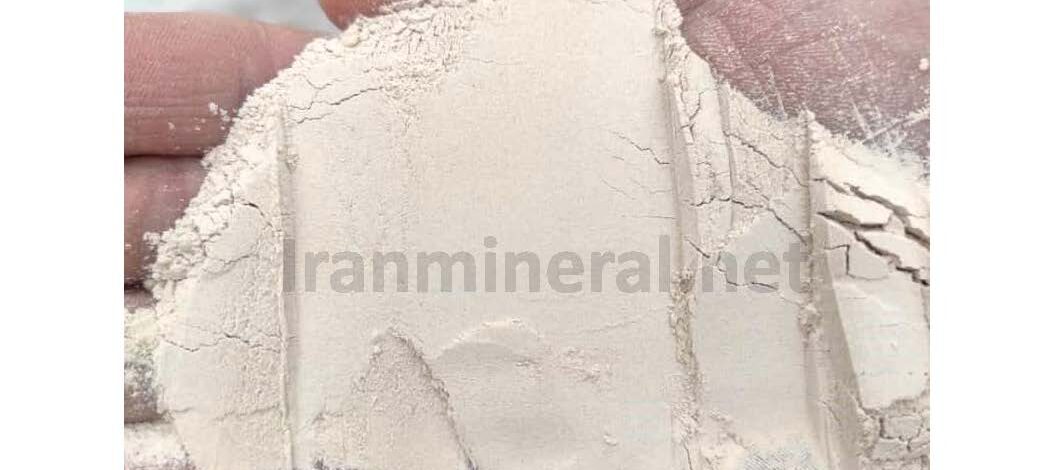
| Appearance | Fine powder |
| Color | Cream, beige, gray or other natural shades |
| Main Mineral | Montmorillonite / Smectite |
| Moisture | Application dependent |
| Particle Size | Application dependent |
| Swelling Capacity | Grade dependent |
| Viscosity | Grade dependent |
| pH | Grade dependent |
| CEC | Grade dependent |
| Bulk Density | Grade dependent |
| Packaging | Bags or bulk |
These values should not be presented as universal specifications. The final specification should always be based on the actual product and laboratory analysis.
Bentonite Particle Size
Particle size is important because it affects hydration, dispersion, mixing, handling, and final product performance.
Depending on the application, bentonite may be supplied as:
- Powder
- Fine powder
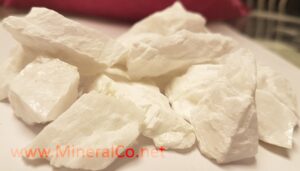
- Granular material
- Customized particle-size distributions
Buyers should specify the required mesh size or particle-size distribution when requesting a quotation.
Bentonite Packaging
Bentonite can be supplied in different packaging formats depending on customer requirements.
Common options include:
- 20–25 kg bags
- 25 kg bags
- 40 kg bags
- 50 kg bags
- Jumbo bags
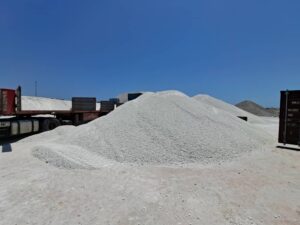
- Bulk shipments
Bentonite Lump
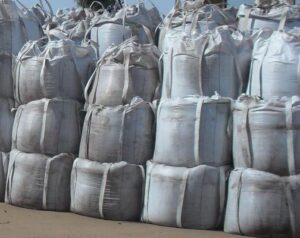
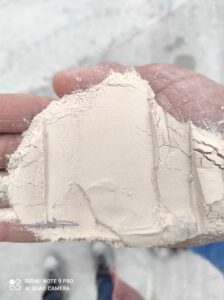
The appropriate packaging should be selected according to transportation, storage, handling equipment, and destination requirements.
How to Choose the Right Bentonite
Choosing bentonite based only on price can lead to poor industrial performance.
Before purchasing, buyers should define:
- Intended application
- Required swelling capacity
- Required viscosity
- Moisture limit
- Particle size
- Chemical composition
- Montmorillonite content
- Required binding performance
- Packaging
- Required certification
A representative sample should ideally be tested before placing a large commercial order.
Bentonite Quality Control
Quality consistency is especially important for industrial users who consume bentonite continuously.
A reliable supply program should include:
- Consistent source
- Defined product specification
- Batch testing
- Certificate of Analysis
- Proper packaging
- Moisture control
- Traceability
- Pre-shipment inspection when required
Storage and Handling of Bentonite
Bentonite should be protected from excessive moisture before use.
Recommended storage conditions generally include:
- Dry warehouse
- Protection from rain and groundwater
- Sealed packaging
- Good ventilation
- Protection from contamination
Because bentonite readily interacts with water, exposure to moisture can affect its handling and performance.
Bentonite Price
Bentonite prices vary according to:
- Grade
- Quality
- Application
- Processing
- Particle size
- Packaging
- Order quantity
- Origin
- Transportation costs
- Destination
- Incoterms
- Inspection and certification requirements
Therefore, there is no single international price for bentonite.
For an accurate quotation, buyers should provide the required grade, quantity, destination, packaging, and technical specifications.
Buying Bentonite from Iran
International buyers looking for Iranian bentonite should request a complete commercial and technical quotation.
A proper inquiry should include:
- Product name
- Intended application
- Required specification
- Quantity
- Packaging
- Destination port
- Preferred Incoterm
- Required documents
- Inspection requirements
The supplier can then provide a technical specification, quotation, sample information, and estimated delivery schedule.
Frequently Asked Questions (FAQ)
What is bentonite used for?
Bentonite is used in drilling fluids, foundry molding, iron ore pelletizing, construction, environmental sealing, absorbents, and other industrial applications.
What is the difference between sodium and calcium bentonite?
Sodium bentonite generally has higher swelling capacity, while calcium bentonite generally has lower swelling but can provide useful absorption and binding properties.
Is Iranian bentonite suitable for drilling?
Iran produces bentonite grades that can be used for drilling applications. Suitability should be determined by laboratory testing against the required drilling specification.
What packaging is available?
Depending on the supplier and order requirements, bentonite may be supplied in standard bags, larger bags, jumbo bags, or bulk form.
How do I request a bentonite quotation?
Provide the required grade or application, quantity, packaging, destination, and technical requirements. The supplier can then prepare a suitable quotation and specification sheet.
Can I receive a sample before ordering?
Sample availability depends on the supplier and product. For industrial applications, testing a representative sample before a large order is recommended.
How is bentonite shipped internationally?
Bentonite is commonly transported in bags, jumbo bags, or bulk shipments depending on quantity, packaging requirements, and destination.
Related Bentonite Articles
The following supporting articles can strengthen the internal-linking structure of this Pillar Page:
- What Is Bentonite and How Does It Work?
- Sodium Bentonite vs Calcium Bentonite
- Bentonite for Oil and Gas Drilling
- API Bentonite Specifications
- Bentonite Drilling Mud Properties
- Bentonite for Foundry Applications
- Bentonite for Iron Ore Pelletizing
- Bentonite for Construction
- Bentonite for Geotechnical Engineering
- Bentonite Swelling Capacity
- Bentonite Cation Exchange Capacity
- Bentonite Particle Size and Mesh
- How to Test Bentonite Quality
- Bentonite Powder Uses
- Bentonite Suppliers in Iran
- Bentonite Export from Iran
- How to Buy Bentonite from Iran
- Bentonite Packaging and Shipping
- Factors Affecting Bentonite Price
- Iranian Bentonite vs Bentonite from Other Countries
Conclusion
Iranian bentonite is an important industrial mineral with applications across drilling, foundry, construction, iron ore pelletizing, environmental engineering, and other industries.
The most important consideration when purchasing bentonite is selecting a grade that matches the technical requirements of the intended application. Buyers should evaluate laboratory specifications, consistency, packaging, quantity, and logistics rather than relying only on the product name or price.
For bulk orders, international buyers should request a technical specification sheet, a Certificate of Analysis, a sample where appropriate, packaging details, and a commercial quotation before confirming an order.
Request a Bentonite Quotation
For information about Iranian bentonite availability, specifications, packaging, bulk quantities, and export terms, contact us with your required application, quantity, destination, and technical specifications. Please Contact with info@iranbentonite.net.